Vietnamese Hair VS. Indian hair
What is the difference?
When shopping for luxury human hair extensions, you’ll often hear two origins mentioned again and again: Indian hair and Vietnamese hair. Both are staples in the global hair extensions market and are widely used to create wefted hair bundles, lace closures, wigs, and custom units.
At ManeFocus Hair, we specialize in premium Vietnamese wefted hair extensions, so we believe in educating our clients on why origin matters and how it impacts longevity, texture, and overall quality. Let’s break down the real differences between Indian hair and Vietnamese hair — from sourcing and lifestyle to durability and performance.
Both Indian and Vietnamese hair are 100% human hair, often marketed as “Remy” or “raw.” However, the similarities start to fade once you examine density, strength, sourcing methods, and long-term wear.
Key Similarity
Both origins are widely used for wefted hair extensions. Both can be straightened, curled, colored, and styled. Both can be high quality if ethically sourced and minimally processed. That said, not all hair is created equal — especially in the luxury extensions market.
Indian Hair: Versatile but Often Heavily Processed
Texture & Density
Indian hair is naturally fine to medium in strand diameter. It has a natural wave pattern and blends easily with many hair types, which is why it’s so popular. However, Indian hair often has less density from root to tip, tangles faster over time if over-processed, and requires more chemical intervention to standardize texture.
Sourcing Practices
Most Indian hair comes from temple donations and is collected in bulk from multiple donors. The hair is shaved from the head vs. cut off into a ponytail. Because hair is gathered from many sources, it’s typically mixed together, acid-washed to remove cuticles, and silicone-coated to create initial shine. This process can make the hair look beautiful at first, but it often leads to a shorter lifespan, increased shedding, and dryness after several washes.
Private village collection is rare but considered higher grade. In this process, hair is cut directly from women in rural areas and is usually sold, not donated. Vendors pay per ponytail, and the hair is cut carefully, bundled, and kept intact. This is where true raw Indian hair comes from—but it’s small-batch, harder to scale, more expensive than typical “Indian hair,” and often reserved for boutique or private-label buyers.
Raw Indian hair does exists but most Indian hair on the market is not raw. Temple hair is ethical but inconsistent. Village-collected Indian hair is the highest tier but rear and doesn’t compare the the quality of Vietnamese hair.
Environmental & Lifestyle Factors
While Indian hair is healthy at the time of donation, contributors often live in humid environments, wash hair frequently with strong soaps, and wear hair tied or braided daily. These factors can weaken the cuticle over time before the hair even reaches production.
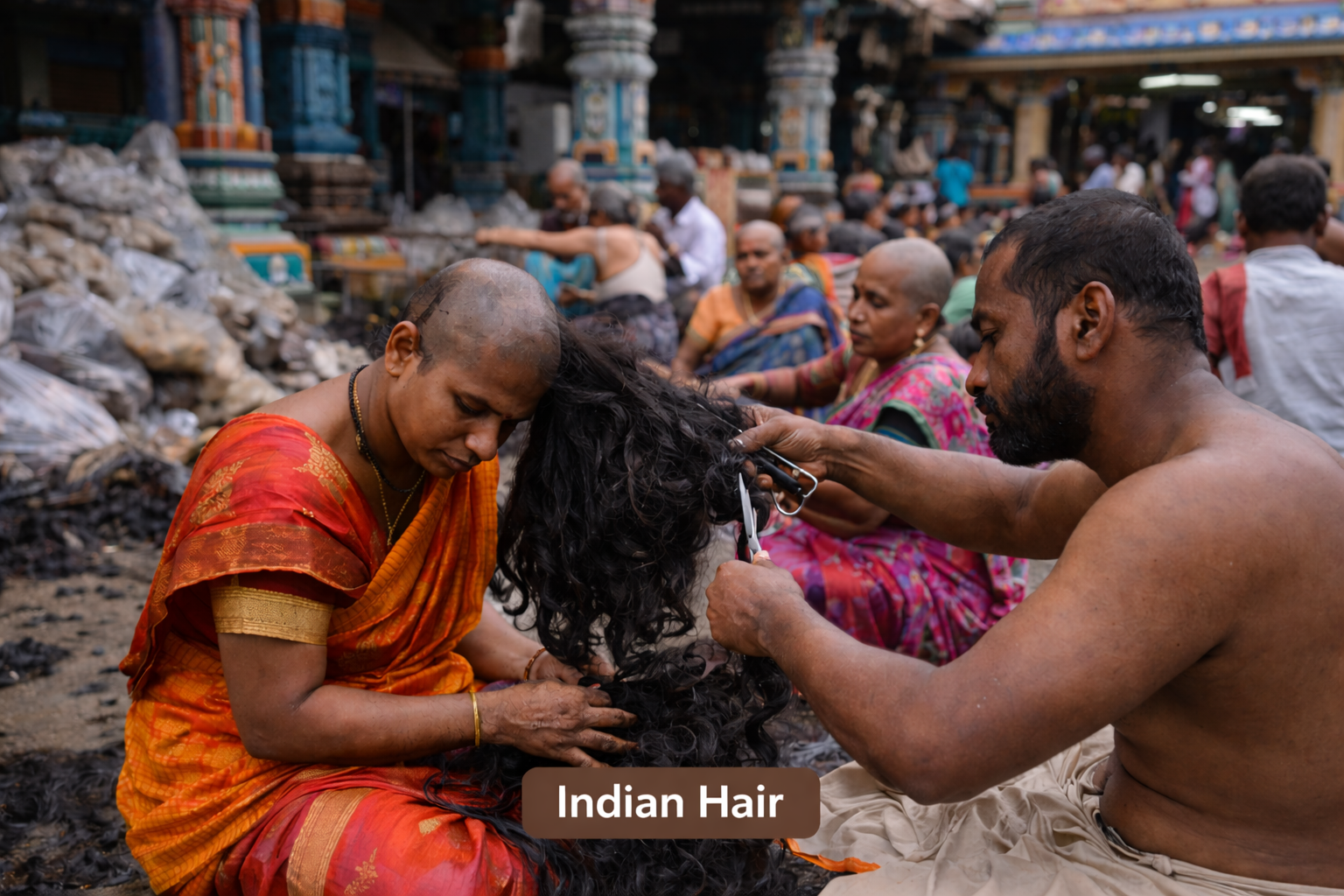
Sacred hair donation ritual at the temple called tonsuring
Vietnamese Hair: The Gold Standard for Wefted Hair Extensions
Texture & Density
Vietnamese hair is known in the luxury hair industry for being thick-stranded, naturally straight or softly wavy, and dense from root to tip. At ManeFocus Hair, this density is exactly why our wefted bundles maintain fullness even at longer lengths.
Sourcing Practices
High-quality Vietnamese hair is typically collected from single donors, cut directly from the donor’s head, and not mixed or blended. Premium Vietnamese hair is often raw or minimally processed, cuticle-aligned in one direction, and never acid-washed. This means the hair retains its natural strength, elasticity, and longevity.
Lifestyle & Environmental Advantages
Vietnamese hair donors often live in rural areas, follow traditional hair care practices, use rice water, herbs, and natural oils, and rarely color or heat style their hair. These lifestyle habits result in stronger cuticles, less breakage, and hair that can last years with proper care. This is one of the biggest reasons Vietnamese wefted hair extensions are considered healthier overall.
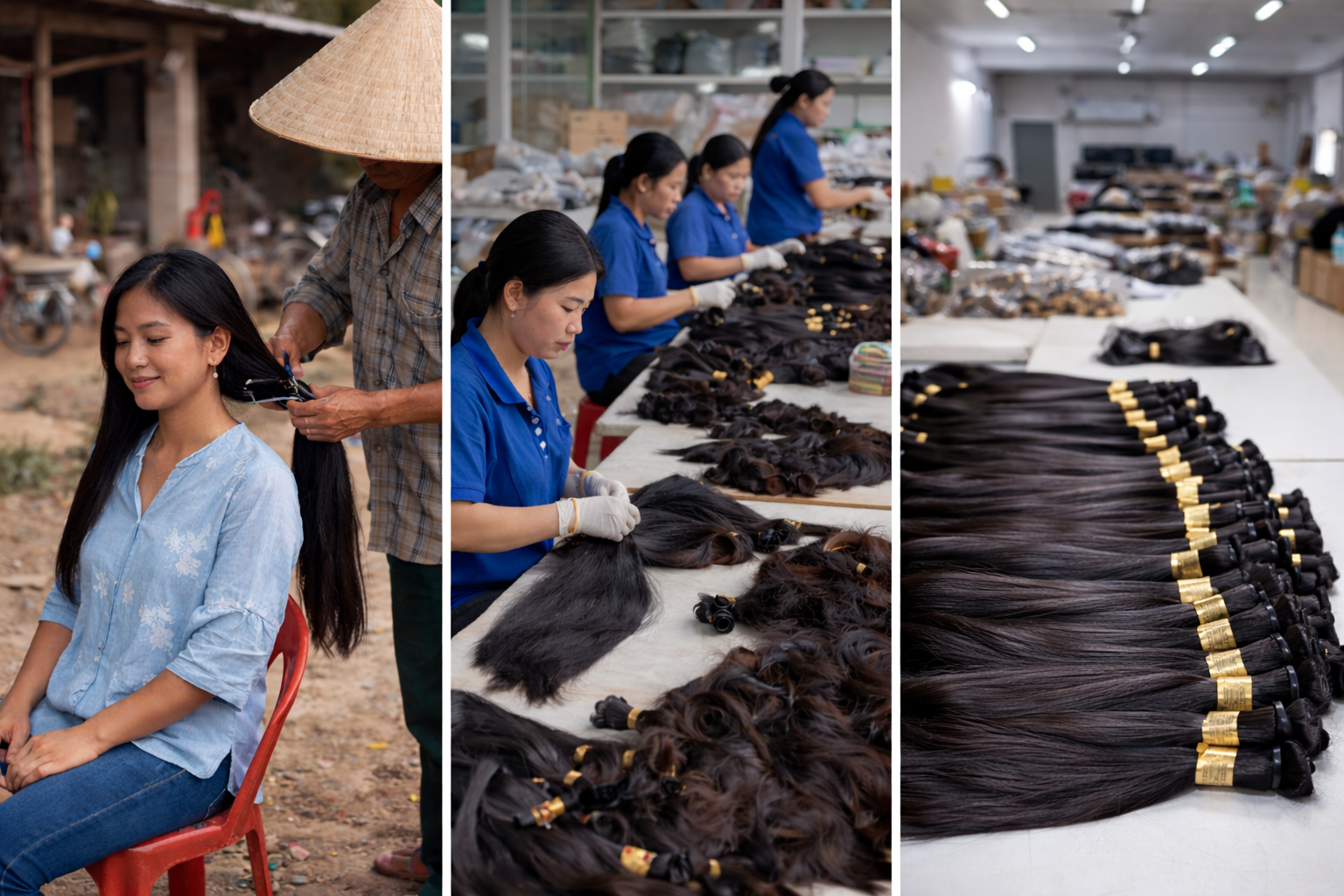
Vietnamese process of cutting a ponytail in the rural areas and process before being sold.
Which Hair Is Healthier?
When comparing Indian hair vs. Vietnamese hair, Vietnamese hair typically wins in terms of cuticle integrity, strand thickness, longevity, and resistance to tangling and shedding. Indian hair can still be beautiful, but it often requires more processing to meet market demands — which directly affects durability.
At ManeFocus Hair, we prioritize hair that performs long-term, not just on day one.
Performance in Wefted Hair Extensions
For wefted bundles specifically, Vietnamese hair excels because it holds fullness at the weft, sheds less when sewn or cut, maintains texture after repeated washing, and transitions seamlessly from straight to wavy styles. This makes it ideal for sew-ins, custom wigs, and clients who want luxury hair that lasts.
Why ManeFocus Hair Chooses Vietnamese Hair
We chose Vietnamese hair intentionally — not because it’s trendy, but because it aligns with our standards. ManeFocus Hair wefted extensions are sourced with quality over quantity in mind, designed for stylists and clients who demand longevity, and built to maintain softness, density, and versatility.
Our philosophy is simple: Your mane is our main focus — and origin matters.
Indian hair and Vietnamese hair both have a place in the hair extensions market, but the difference lies in how the hair is sourced, treated, and preserved. If you’re investing in luxury wefted hair extensions and want hair that looks better over time — not worse — Vietnamese hair offers unmatched strength, density, and lifespan.
At ManeFocus Hair, we don’t cut corners — we cut from the source.